
Hip Labral Tear
Dr. Jorge Chahla, a hip preservation surgeon at Midwest Orthopaedics at Rush, treats hip labral tears in athletes and active adults in Chicago, Oak Brook and Naperville.
To schedule a consultation, call (312) 432-2531 or see the office locations. Resumen en español.
What is a hip labral tear?
A hip labral tear happens when the labrum, a rubber band of tissue around the socket, detaches from part of the socket. Most tears sit between the 11 o’clock and 3 o’clock positions on the clock face of the socket, so almost always toward the front and the top. The labrum works like a suction seal that keeps the hip stable, which is why Dr. Chahla saves it whenever he can.
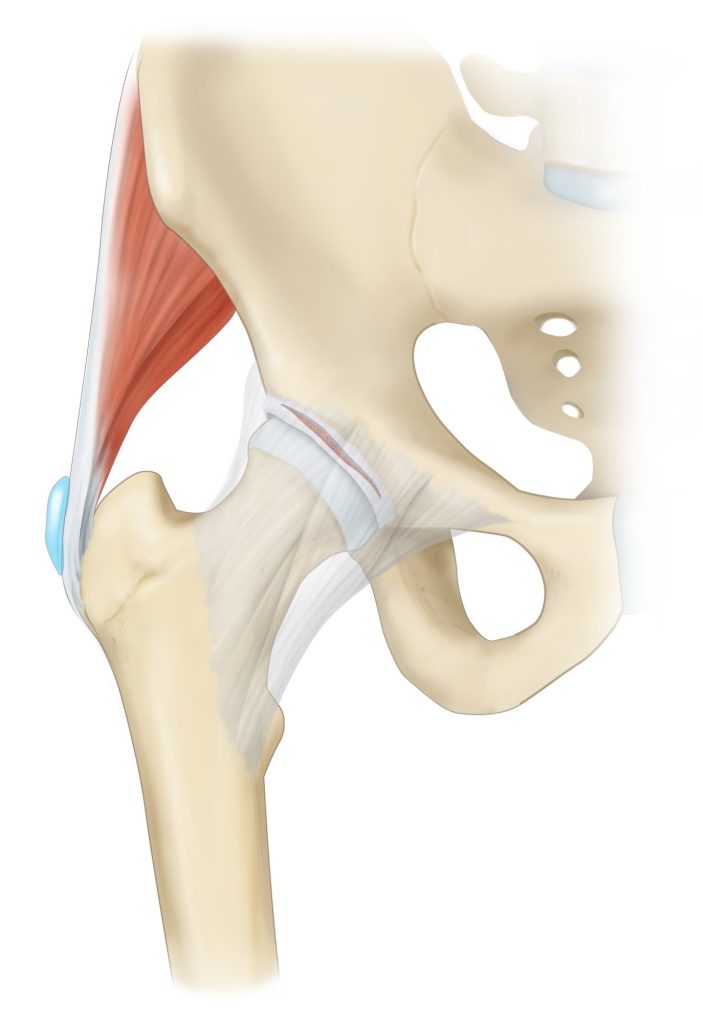
Hip labral tear symptoms
A torn labrum in the hip usually causes deep pain in the groin or the front of the hip. Common symptoms include:
- pain when sitting for a long time, getting out of a car, climbing high steps or squatting
- a click, catch or locking feeling with certain movements
- stiffness and less rotation in the hip
- pain with sports that combine deep bending and turning, such as soccer, football, baseball and basketball
Not every tear seen on an MRI causes pain, so Dr. Chahla plans treatment only when the symptoms, the exam and the imaging point to the same problem [1].
What causes a torn labrum in the hip
Most hip labral tears are linked to hip impingement (FAI), where the shape of the ball or the socket pinches the labrum when the hip bends deeply and turns in [1]. Other causes include hip dysplasia, a loose or unstable hip, and twisting injuries in sport.
How a hip labral tear is diagnosed
Dr. Chahla starts with the history and an exam that tests which hip positions reproduce the pain. X-rays show the shape of the bones, an MRI shows the labrum and cartilage, and a 3D CT scan can show exactly where the bones collide. When the source of pain is unclear, a numbing injection into the joint helps confirm that the pain comes from inside the hip.
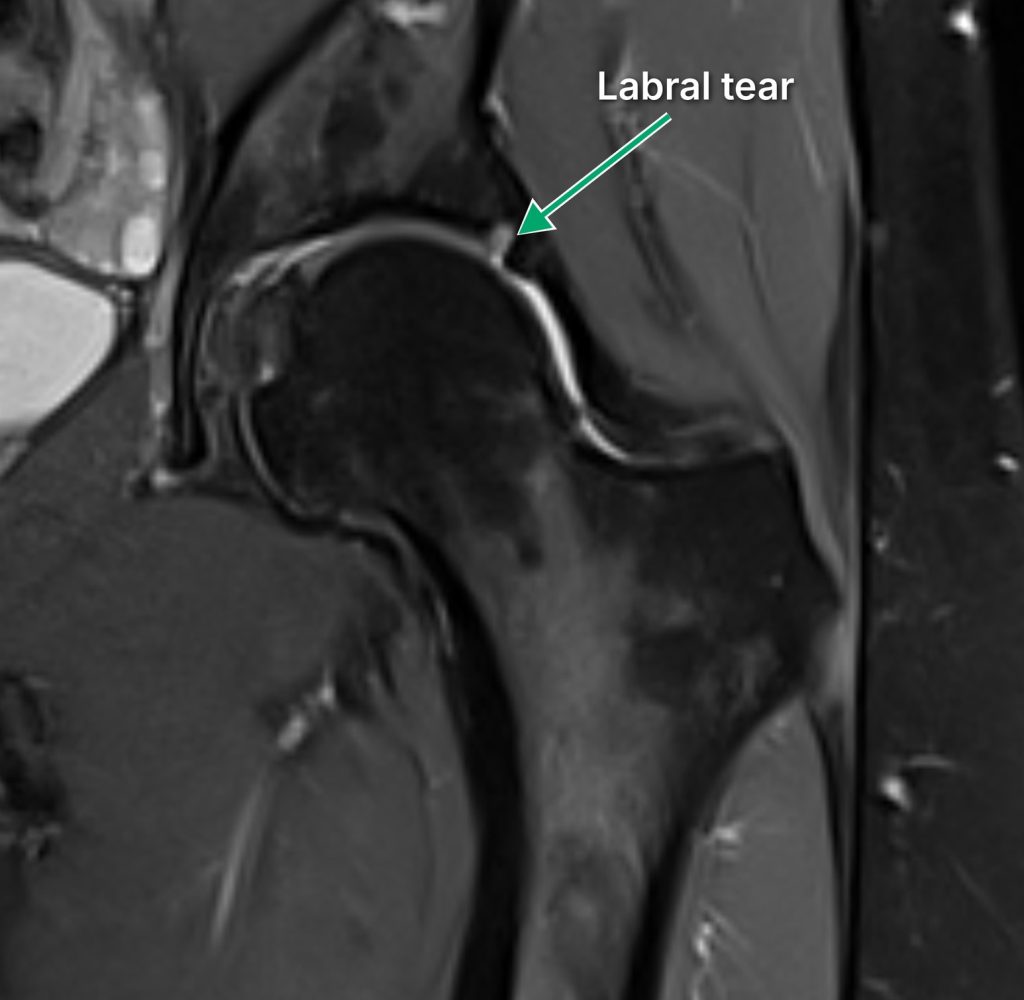
Hip labral tear treatment without surgery
Most people start without surgery: activity changes, physical therapy and sometimes an injection [1].
Hip labral tear exercises
Physical therapy for a labral tear usually focuses on:
- strengthening the glutes and the deep hip muscles
- core and pelvic floor work, which Dr. Chahla includes for most hip patients
- control of the hip and pelvis during single leg movements
- avoiding positions that pinch the front of the hip, such as deep squats, while the hip settles
The right program depends on what caused the tear, so exercises are best guided by a physical therapist who knows the diagnosis.
Hip labral tear surgery: repair, reconstruction or augmentation
When pain continues despite therapy, Dr. Chahla treats the tear with hip arthroscopy, a same day operation through a few small incisions. He also corrects the bone shape that caused the tear, because repairing the labrum without treating the impingement leaves the cause in place [1].
Hip labral repair
Dr. Chahla repairs the labrum in most hips, because a patient’s own tissue is better than a graft from someone else: it has its own blood supply, and it is already part of the joint. He reattaches the labrum to the rim of the socket with anchors made entirely of suture, with no metal or plastic, using very small instruments that protect the tissue. Even in complicated hips, he uses techniques that repair tears that in the past would have simply been trimmed away.
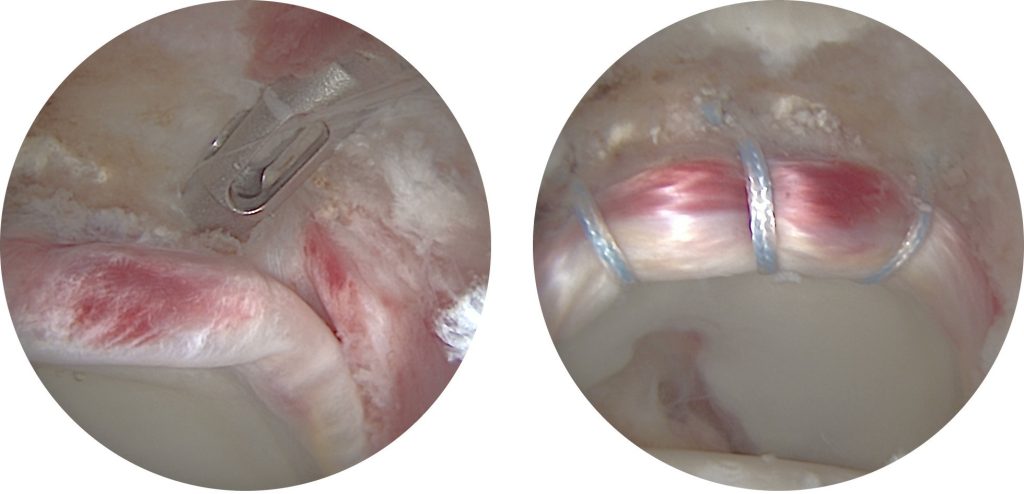
The evidence supports saving the labrum. In a randomized study, women whose labrum was repaired had better hip function than women whose labrum was trimmed [2], and current reviews from Dr. Chahla’s group recommend repair whenever the tissue is viable [1].
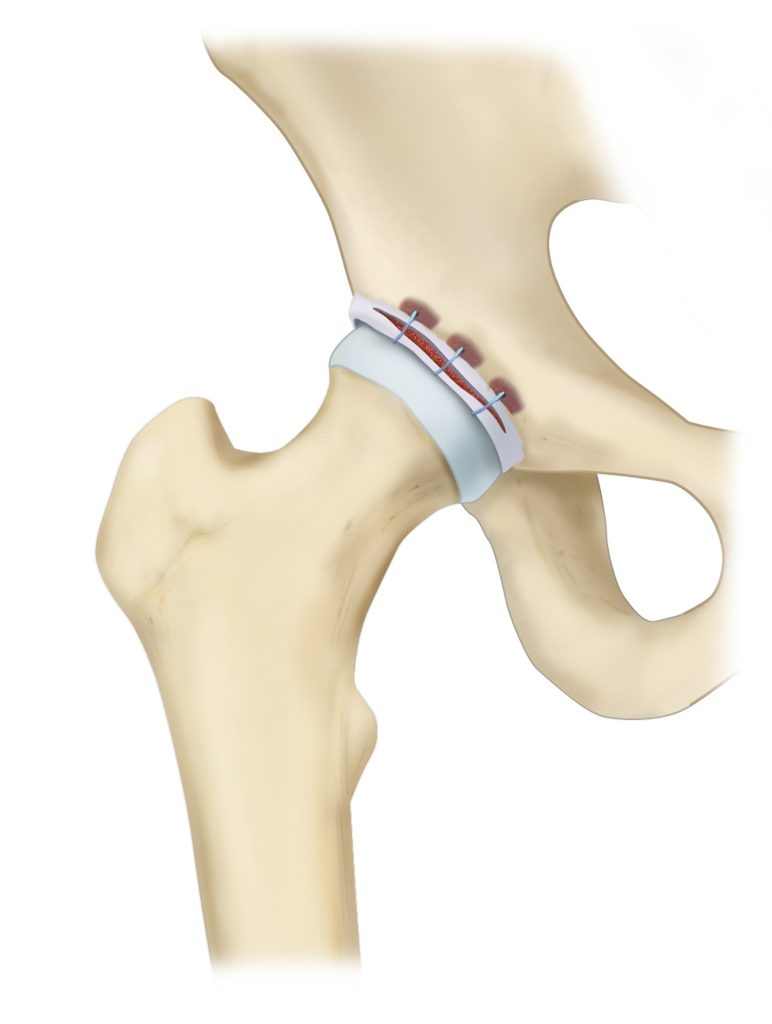
Hip labral reconstruction
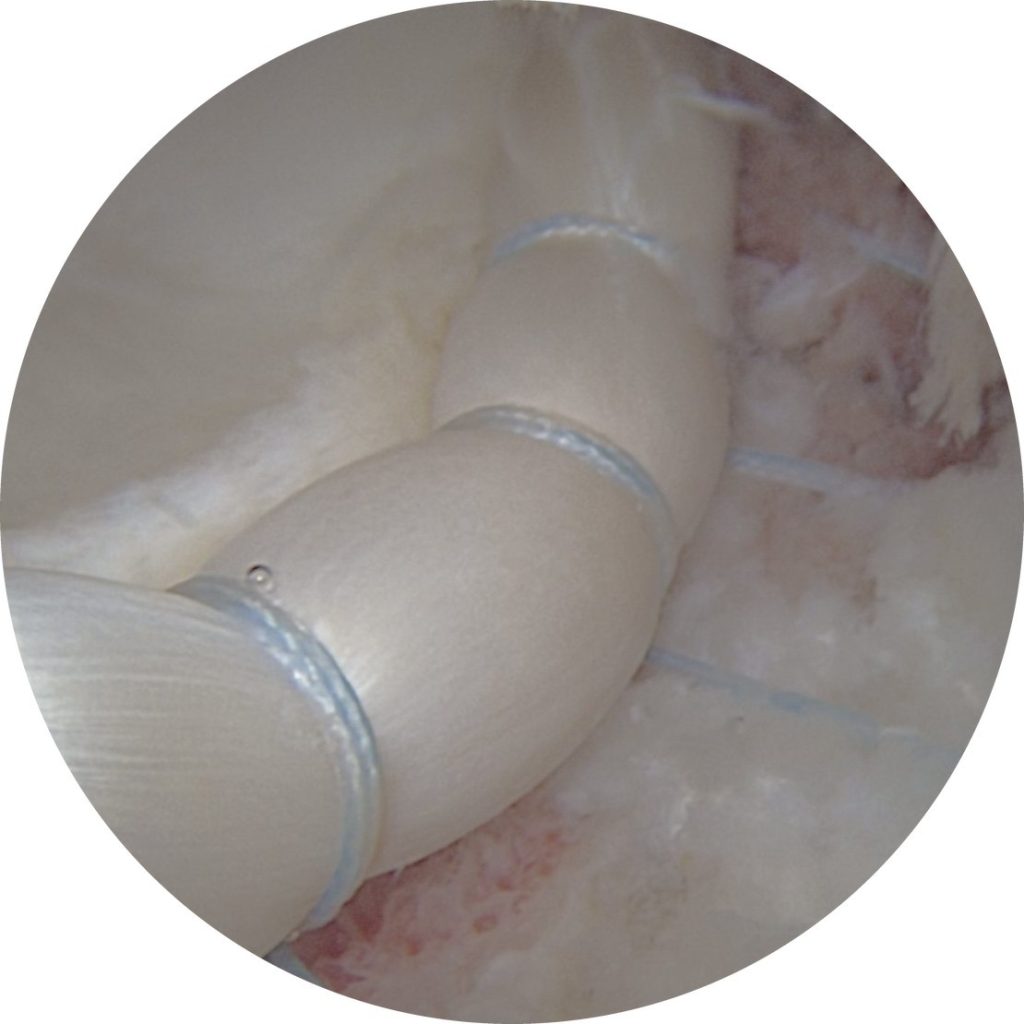
Dr. Chahla reconstructs the labrum only when it is no longer functional. That happens mostly in revision surgery, when the labrum was damaged in an earlier operation, and in hips with a large pincer deformity, where the labrum is too thin or no longer holds the suction seal. A reconstruction replaces the damaged part of the labrum (segmental) or all of it (circumferential) with a tissue graft, taken from the patient or from a donor. A 2026 analysis Dr. Chahla coauthored, covering 28 studies and 1,817 hips, found that both approaches gave significant and similar improvements in pain and function [3]. Reconstruction with the patient’s own tissue also improves results in properly selected patients [4].
Hip labral augmentation
Augmentation is for a labrum that is still intact but too thin to create the suction seal. Dr. Chahla keeps the patient’s own labrum and adds a graft to it, which improves the mechanics of the joint. His group has described augmentation using tissue from the patient’s own hip capsule [5].
Closing the capsule
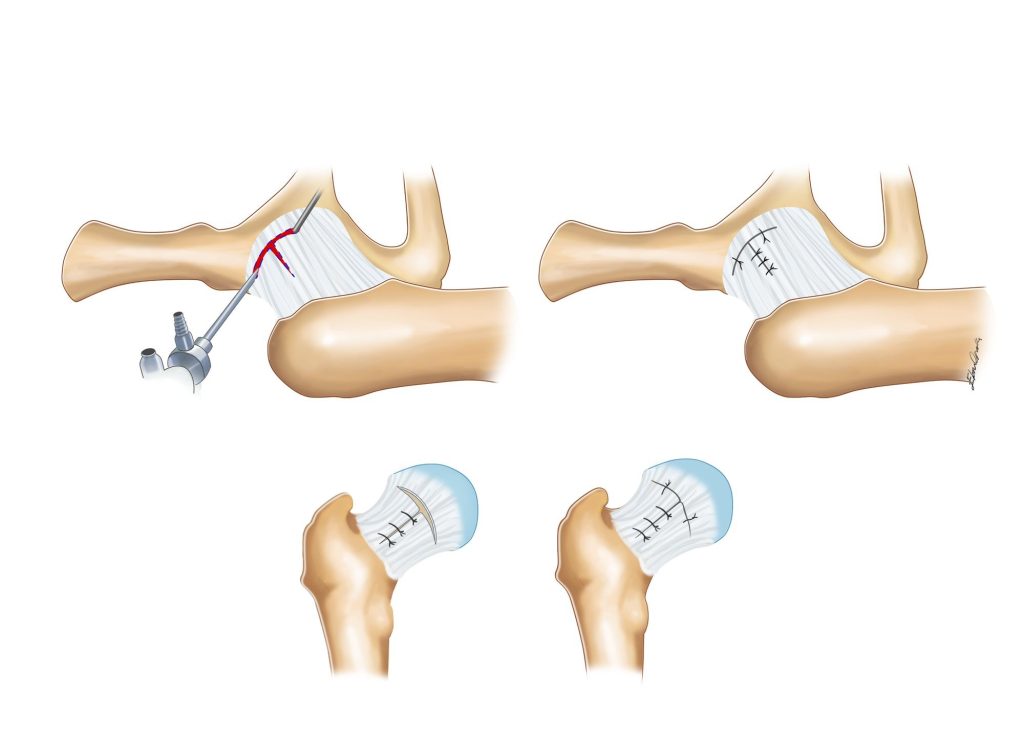
At the end of surgery Dr. Chahla closes the joint capsule that was opened to reach the labrum. In a Rush study he coauthored, 97% of patients whose capsule was fully closed had not needed a revision or a hip replacement at least five years later [6].
Results after hip labral repair
When patients are carefully selected, more than 90% do very well, and choosing the right patient is the main driver of an excellent outcome. In a Rush comparison Dr. Chahla coauthored, 92% of 60 patients having a first hip arthroscopy reached a clinically meaningful improvement on every outcome score measured [7].
Dr. Chahla’s group follows more than 4,000 hip patients in its research database. That data helps predict who will do well and which risk factors point to a less than optimal result, so the team is selective about who has surgery. Paired with good physical therapy and performance training, the results are excellent.
Recovery time after hip labral tear surgery
Physical therapy starts the day after surgery. After a labral repair, patients keep weight off the leg for two weeks with a brace and crutches, and most are off crutches between three and four weeks. After a reconstruction, protected weight bearing lasts about four weeks. Most athletes are back to sport 4 to 7 months after surgery, and many keep improving for up to a year. A review of 35 studies found that athletes returned to sport an average of 7 months after surgery, and 74% returned at the same competitive level [8].
Frequently asked questions
A torn labrum usually does not reattach to the bone by itself, but pain often settles with physical therapy and activity changes, which is why treatment starts there. Surgery is considered when pain keeps limiting daily life or sport.
Most people describe deep pain in the groin or the front of the hip, often with a click or catch, that is worse with long sitting, getting out of a car or pivoting.
Most people use crutches for two to four weeks. Most athletes are back to sport 4 to 7 months after surgery, and many keep improving for up to a year. Reconstruction takes longer.
Request an evaluation
Dr. Chahla sees patients at Midwest Orthopaedics at Rush in Chicago, Oak Brook and Naperville, and sees patients in English and Spanish. Call (312) 432-2531 to schedule, request an appointment or email chahlapractice@rushortho.com. Patients who already had hip surgery can read about revision hip arthroscopy.
- Chicago: 1611 W. Harrison St., Suite 400, Chicago, IL 60612
- Oak Brook: 2011 York Rd., Oak Brook, IL 60523
- Naperville: 55 Shuman Blvd., Suite 700, Naperville, IL 60563
Resumen en español
El labrum es un anillo de tejido que rodea la cavidad de la cadera y funciona como un sello de succión que la mantiene estable. Una rotura del labrum suele causar dolor profundo en la ingle o en la parte delantera de la cadera, a veces con chasquidos o bloqueos. La mayoría de los pacientes empieza con fisioterapia y cambios de actividad. Cuando el dolor persiste, el Dr. Chahla trata la rotura con artroscopia de cadera: repara el labrum siempre que puede, lo reconstruye con un injerto cuando ya no funciona y corrige la forma del hueso que causó la lesión (pinzamiento femoroacetabular). La mayoría de los deportistas vuelve al deporte entre 4 y 7 meses después de la cirugía. El Dr. Chahla habla español y atiende en español e inglés en Midwest Orthopaedics at Rush, en Chicago, Oak Brook y Naperville. Para pedir una cita, llame al (312) 432-2531.
References
- Brinkman JC, Kunze KN, Monty TL, Sparks CA, Malloy P, Chahla J, Nho SJ. The management of acetabular labral tears: a contemporary review. Curr Rev Musculoskelet Med. 2026;19(1). pubmed.ncbi.nlm.nih.gov/42334787
- Krych AJ, Thompson M, Knutson Z, Scoon J, Coleman SH. Arthroscopic labral repair versus selective labral debridement in female patients with femoroacetabular impingement: a prospective randomized study. Arthroscopy. 2013;29(1):46-53. pubmed.ncbi.nlm.nih.gov/23276413
- Kurapatti M, Yuro M, Tao BS, et al. (Chahla J). Comparative outcomes of circumferential versus segmental labral reconstruction in hip arthroscopy: a systematic review and meta-analysis. Am J Sports Med. 2026;54(13):3322-3336. pubmed.ncbi.nlm.nih.gov/42377002
- Bessa FS, Williams BT, Polce EM, et al. (Chahla J). Indications and outcomes for arthroscopic hip labral reconstruction with autografts: a systematic review. Front Surg. 2020;7:61. pubmed.ncbi.nlm.nih.gov/33195381
- Singh H, DeFroda SF, Gursoy S, et al. (Chahla J, Nho SJ). Hip labral reconstruction with capsular autograft augmentation. Arthrosc Tech. 2021;10(6):e1547-e1551. pubmed.ncbi.nlm.nih.gov/34258204
- Beck EC, Nwachukwu BU, Chahla J, Clapp IM, Jan K, Nho SJ. Complete capsular closure provides higher rates of clinically significant outcome improvement and higher survivorship versus partial closure after hip arthroscopy at minimum 5-year follow-up. Arthroscopy. 2021;37(6):1833-1842. pubmed.ncbi.nlm.nih.gov/33529782
- Browning RB, Clapp IM, Krivicich LM, et al. (Chahla J, Nho SJ). Repeat revision hip arthroscopy outcomes match that of initial revision but not that of primary surgery for femoroacetabular impingement syndrome. Arthroscopy. 2021;37(12):3434-3441. pubmed.ncbi.nlm.nih.gov/33940125
- Reiman MP, Peters S, Sylvain J, Hagymasi S, Mather RC, Goode AP. Femoroacetabular impingement surgery allows 74% of athletes to return to the same competitive level of sports participation but their level of performance remains unreported: a systematic review with meta-analysis. Br J Sports Med. 2018;52(15):972-981. pubmed.ncbi.nlm.nih.gov/29581142
Medically reviewed by Jorge Chahla, MD, PhD. Last reviewed: November 21, 2026.
- Triple fellowship-trained sports medicine surgeon
- Board certified in orthopaedic sports medicine
- Team physician for the Chicago Bulls, White Sox and US Soccer
- Performs over 800 surgeries per year
- Associate professor of orthopedic surgery at Rush University
- Learn more