
Shoulder Arthroscopy (Shoulder Scope)
Shoulder arthroscopy is surgery done through a few small incisions with a small camera, instead of one large opening. Dr. Jorge Chahla, a sports medicine surgeon at Midwest Orthopaedics at Rush, uses arthroscopic shoulder surgery to stabilize shoulders that dislocate, repair torn rotator cuff tendons and repair SLAP tears in athletes and active adults. Most shoulder arthroscopy is same day surgery.
To schedule a consultation, call (312) 432-2531 or see the office locations. Se habla español.
What is shoulder arthroscopy?
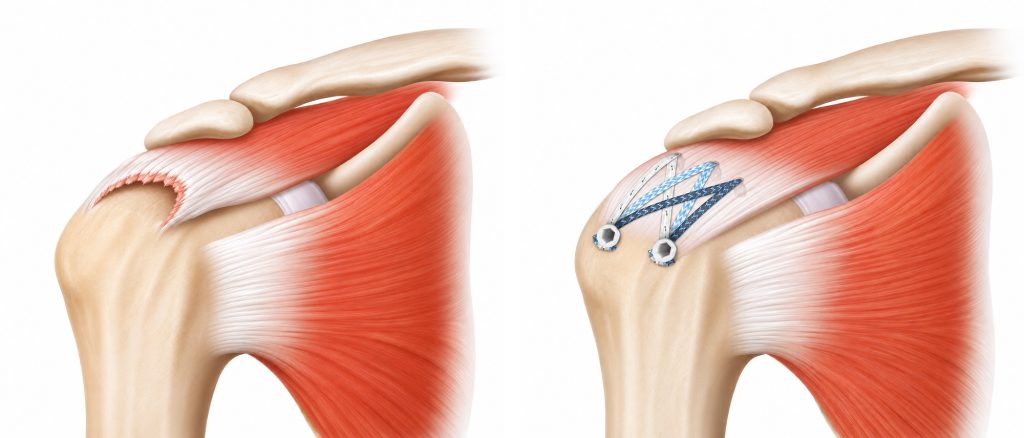
During a shoulder arthroscopy, the camera (the arthroscope) enters the joint through a small incision and shows the inside of the shoulder on a screen. Thin instruments go through two or three other small incisions. Torn tissue is reattached to the bone with small anchors that hold strong sutures. Compared with open surgery, the small incisions mean less pain and less damage to the muscles around the shoulder.
What can a shoulder scope treat?
Shoulder instability and dislocation
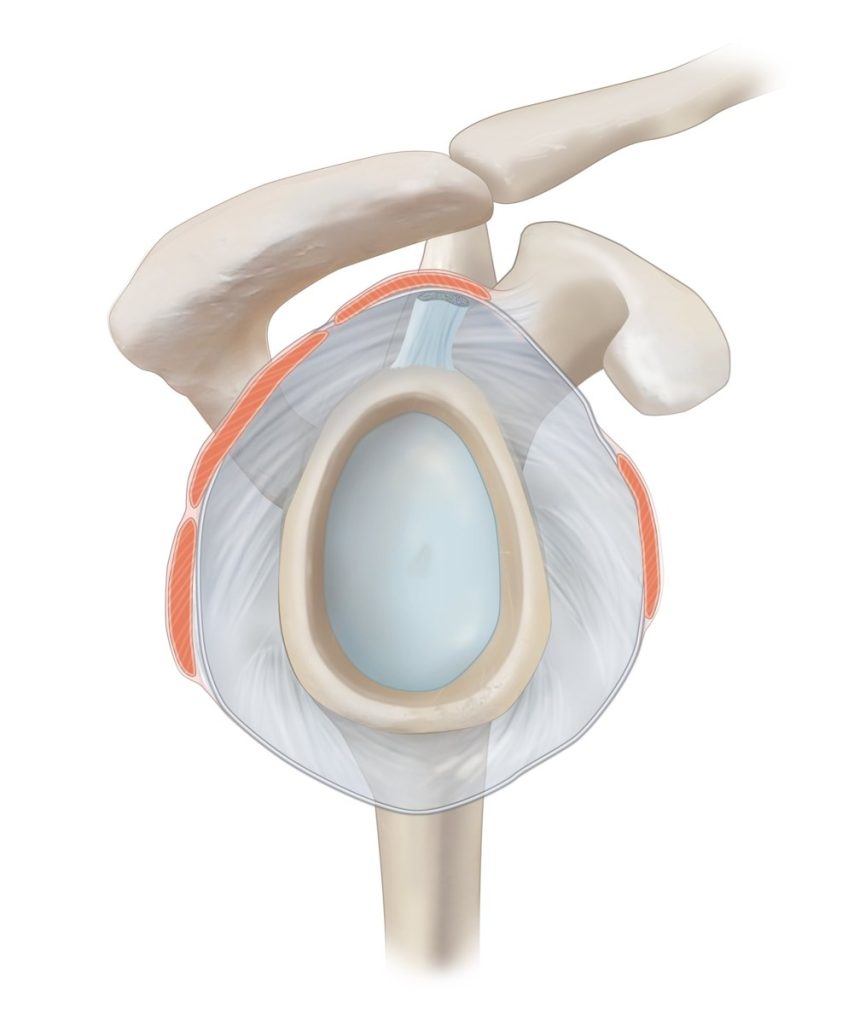
When the shoulder dislocates, the labrum, the ring of cartilage around the socket, often tears off the bone. In an arthroscopic stabilization, Dr. Chahla reattaches the labrum to the rim of the socket and tightens the stretched capsule. When a large part of the socket bone is missing, the shoulder needs a bone graft procedure instead, and Dr. Chahla coordinates that care with the Midwest Orthopaedics at Rush shoulder service. See shoulder instability and dislocation.
Rotator cuff tears
The rotator cuff tendons lift and turn the arm. When a torn tendon causes pain and weakness, Dr. Chahla repairs it arthroscopically, reattaching it to the bone with small anchors. See rotator cuff tears.
SLAP tears and biceps problems
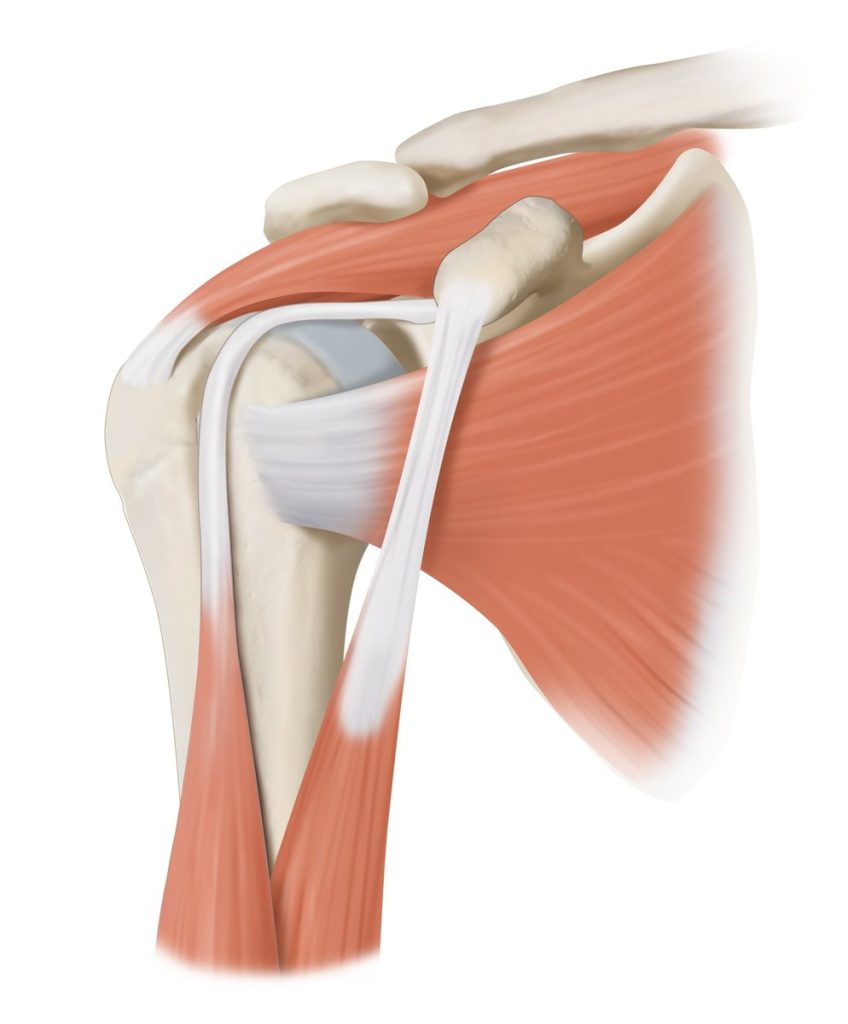
A SLAP tear is a tear at the top of the labrum, where the biceps tendon attaches, and is common in throwing and overhead athletes. When pain or instability continues despite physical therapy, Dr. Chahla repairs the labrum arthroscopically. See SLAP tears and biceps tendinitis.
For advanced shoulder arthritis, when a shoulder replacement is the best option, Dr. Chahla refers patients to the Midwest Orthopaedics at Rush shoulder service.
What to expect on the day of surgery
Shoulder arthroscopy is usually done at an outpatient surgery center, and most patients go home the same day. Dr. Chahla operates mainly at surgery centers in Chicago’s Gold Coast, Oak Brook and Oswego, and sometimes at Rush University Medical Center, Rush Oak Park Hospital or other Rush surgical facilities. Patients leave with the arm in a sling and a written physical therapy protocol.
The first days at home
These steps come from Dr. Chahla’s written post-operative instructions after a shoulder scope:
- Sling. After a stabilization, a SLAP repair or a rotator cuff repair, the sling stays on at all times for 4 weeks, except during physical therapy exercises and washing. After a scope with no repair, it is worn for only 1 to 2 days, for comfort.
- Medications. Aspirin for 30 days lowers the risk of blood clots. A prescribed pain medicine covers the first few days, and most patients switch to acetaminophen (Tylenol) after 2 to 3 days. Do not drive or drink alcohol while taking narcotic pain medicine.
- Ice. Ice as much as possible for the first 2 to 3 weeks to control pain and swelling: an ice pack 20 minutes on and 20 minutes off, or a cold therapy unit, always with a layer between the ice and the skin.
- Sleep and motion. Many patients sleep in a recliner, or in bed with pillows supporting the arm. Gentle pendulum exercises and elbow, wrist and hand motion start the day after surgery.
- Dressing and showering. Do not shower or bathe until the bulky dressing comes off after 2 to 3 days. You can then shower with the incisions covered, but do not soak them in a bath or pool for about 4 weeks, until they are fully healed.
- Physical therapy, work and driving. Physical therapy starts 2 weeks after surgery. Most people return to desk work or school in 4 to 7 days if they can keep wearing the sling, and can drive once the sling is off and they no longer take narcotic pain medicine.
- First visit. About 2 weeks after surgery, when the stitches come out.
Call the office at (312) 432-2531 for a fever over 100.4°F, chills, pus or spreading redness at the incisions, constant pain or cramping in a calf, which can be a sign of a blood clot, or if you cannot urinate for more than a day. Call 911 for chest pain or trouble breathing.
Shoulder arthroscopy recovery time
Arthroscopic shoulder surgery recovery depends on what was repaired. After a rotator cuff repair, Dr. Chahla’s protocol keeps the arm in a sling for 4 weeks, starts gentle motion with a physical therapist at about 2 weeks, begins strengthening at about 12 weeks and allows return to sport no earlier than 6 months, once strength and motion tests are met.
After a shoulder stabilization, most of the improvement comes in the first 6 months. A review Dr. Chahla coauthored of 590 patients found that patients kept improving for up to a year after surgery [1].
Results after arthroscopic shoulder stabilization
In a study from Dr. Chahla’s group of patients two years after arthroscopic anterior shoulder stabilization, 77% to 91% reached a meaningful improvement, depending on the score used. Patients who had symptoms for more than 6 months before surgery were less likely to reach that improvement [2]. The shoulder can dislocate again after an arthroscopic repair; across published studies the rate averaged about 17%, and it was higher in younger patients [3]. That is why Dr. Chahla measures bone loss before surgery and matches the operation to each shoulder.
Frequently asked questions
Yes. A shoulder scope, arthroscopic shoulder surgery and shoulder arthroscopy all describe surgery through small incisions with a camera. What is repaired during the scope determines the recovery.
After a stabilization, a SLAP repair or a rotator cuff repair, the sling is worn at all times for 4 weeks. After a scope with no repair, it is worn for only 1 to 2 days, for comfort.
After a rotator cuff repair, no earlier than 6 months, and only after passing strength and motion tests. After a stabilization, most patients return to sport once strength and stability tests are passed, with improvement continuing up to a year.
Where Dr. Chahla sees patients
Dr. Chahla sees patients at Midwest Orthopaedics at Rush in Chicago, Oak Brook and Naperville. He is a native Spanish speaker and sees patients in English and Spanish. Call (312) 432-2531, request an appointment online or email chahlapractice@rushortho.com. For all shoulder conditions, see the shoulder surgeon page.
- Chicago: 1611 W. Harrison St., Suite 400, Chicago, IL 60612
- Oak Brook: 2011 York Road, Oak Brook, IL 60523
- Naperville: 55 Shuman Blvd., Suite 700, Naperville, IL 60563
Atención en español. El Dr. Chahla atiende a sus pacientes en español. Llame al (312) 432-2531.
References
- Patel BH, Lu Y, Agarwalla A, et al. (Chahla J). Maximal medical improvement following shoulder stabilization surgery may require up to 1 year: a systematic review. HSS J. 2020;16(Suppl 2):534-543. pubmed.ncbi.nlm.nih.gov/33380993
- Saad Berreta R, Khan ZA, Villarreal JB, et al. (Chahla J). Defining the minimal clinically important difference and patient acceptable symptom state for arthroscopic anterior shoulder stabilization at 2-year follow-up. Orthop J Sports Med. 2026;14(6):23259671261442972. pubmed.ncbi.nlm.nih.gov/42293042
- Kennedy MI, Murphy C, Dornan GJ, et al. (Chahla J). Variability of reporting recurrence after arthroscopic Bankart repair: a call for a standardized study design. Orthop J Sports Med. 2019;7(5):2325967119846915. pubmed.ncbi.nlm.nih.gov/31192268
Medically reviewed by Jorge Chahla, MD, PhD. Last reviewed: November 22, 2026.
- Triple fellowship-trained sports medicine surgeon
- Board certified in orthopaedic sports medicine
- Team physician for the Chicago Bulls, White Sox and US Soccer
- Performs over 800 surgeries per year
- Associate professor of orthopedic surgery at Rush University
- Learn more